
How much does a gravel driveway cost in North Carolina?
Published cost data puts a new gravel driveway at about $1 to $3 per square foot installed. That is LawnStarter’s range, and HomeGuide’s runs higher at $4 to $10. A drive 100 feet long and 10 feet wide lands near $1,000 to $10,000. Site work and base depth decide where yours falls.
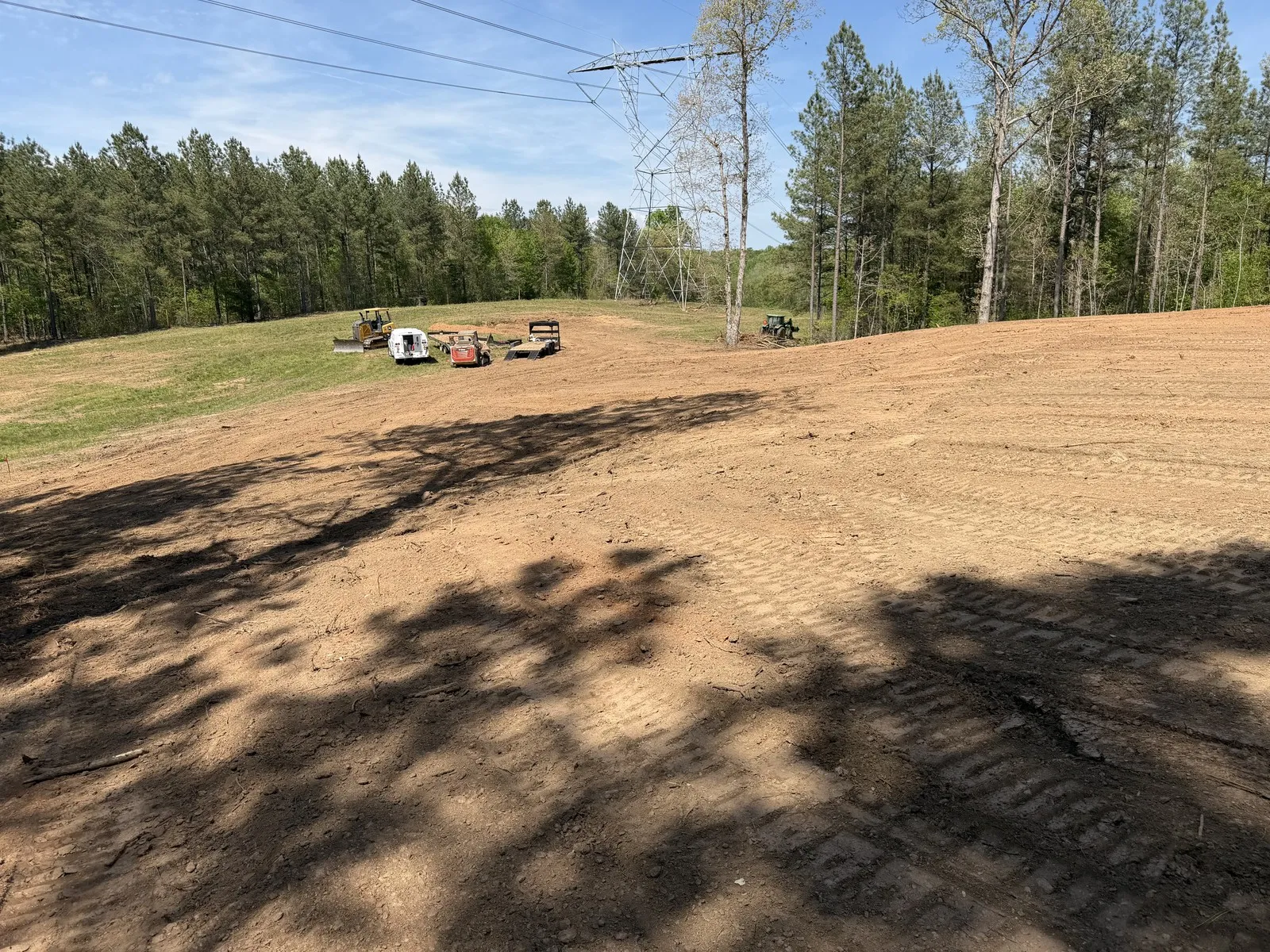
Those are published market ranges. Our gravel driveway work covers the machine side of the job. We clear the path, then cut and crown the bed. The supplier’s trucks bring the stone, and we spread and compact it.
What do published sources say a gravel driveway costs?
LawnStarter puts the national average at $1,500, with a typical range of $600 to $1,800. Its square foot rate is $1 to $3. HomeGuide lands far higher, at $4 to $10 per square foot for labor and materials. Neither figure is specific to North Carolina.
Your actual price comes from an on-site look at the path and the ground under it. LawnStarter and HomeGuide publish these ranges, and LawnStarter prices land prep such as grading as an extra.
| Item | Published range | Source |
|---|---|---|
| Installed driveway, per square foot | $1-$3 | LawnStarter |
| Installed driveway, per square foot | $4-$10 | HomeGuide |
| Whole driveway, typical range | $600-$1,800 | LawnStarter |
| Whole driveway, national average | $1,500 | LawnStarter |
| 12 ft residential gravel road, per linear foot | $5-$10 | HomeGuide |
| 12 ft gravel road, a quarter mile long | $15,000-$60,000 | HomeGuide |
How much does a 1,000 foot gravel driveway cost?
At LawnStarter’s $1 to $3 per square foot, a 1,000 foot drive 10 feet wide runs $10,000 to $30,000. HomeGuide’s rate puts the same drive at $40,000 to $100,000. HomeGuide also prices a 12 foot road a quarter mile long, about 1,320 feet, at $15,000 to $60,000.
Each row below is length times 10 feet of width times the published rate. The stone column uses HomeGuide’s rule of one ton per 60 to 80 square feet at 4 inches deep.
| Drive length, 10 ft wide | Square feet | At $1-$3 per sq ft (LawnStarter) | At $4-$10 per sq ft (HomeGuide) | Stone at 4 in deep |
|---|---|---|---|---|
| 100 ft | 1,000 | $1,000-$3,000 | $4,000-$10,000 | 13-17 tons |
| 250 ft | 2,500 | $2,500-$7,500 | $10,000-$25,000 | 31-42 tons |
| 500 ft | 5,000 | $5,000-$15,000 | $20,000-$50,000 | 63-83 tons |
| 1,000 ft | 10,000 | $10,000-$30,000 | $40,000-$100,000 | 125-167 tons |
A drive 12 feet wide adds 20 percent to every row. At 10 feet wide, the two rates come to $10 to $30 and $40 to $100 per foot.
Is crusher run cheaper than 57 stone?
Usually, going by published prices. HomeGuide’s price guide lists crusher run at $24 to $34 a ton, or about $50 a cubic yard. Its driveway guide has crusher run at $25 to $50 delivered and one-size crushed stone at $30 to $60. HomeGuide does not price 57 stone by name, so ask your supplier for both.
The two stones do different jobs. Crusher run is crushed stone with sand and stone dust mixed in, and HomeGuide says it compacts extremely well. The FHWA gravel roads guide explains why the fines matter on top: stone with very little fine material will not form a crust as a surface. For budgeting, HomeGuide puts bulk gravel at $10 to $50 a ton, or $15 to $75 a cubic yard.
How deep should gravel be for a driveway on red clay?
Published guidance starts at 4 to 6 inches and runs to 8 to 12 inches. LawnStarter says at least 4 inches, and that experts recommend 8 to 12. HomeGuide sets a 5 to 6 inch minimum in layers, and 8 to 12 inches for trucks or RVs.
Our ground pushes toward the deep end. Cleveland County is Piedmont red clay, and its Cecil soils sit on the uplands. That tight red clay subsoil takes in rain slowly once wet, and Shelby’s rain normal is 47.89 inches a year.
The FHWA gravel roads guide warns about wet silt and clay pumping up into new stone. Its fix is fabric on the subgrade, with at least 6 inches of stone in the first layer over it. HomeGuide adds that fabric stops the gravel from sinking into the subsoil.
What moves the price of a gravel driveway?
Length and width move it most. HomeGuide says they have the biggest impact on the total cost, and it puts labor at about half of it. After size comes the work before the stone: clearing, grading, the culvert and how far the stone has to travel.
- Clearing the path. Trees and stumps come out first. Wooded ground here carries loblolly pine and red oak, among others. Our post on land clearing costs per acre covers a path through the woods.
- Grading and crowning the bed. LawnStarter lists grading at $100 to $3,400 and says clay soils raise grading costs. HomeGuide says challenging terrain adds 20 to 50 percent to labor.
- A culvert at the road. Where the drive crosses a ditch, a pipe goes under it first. Pipe sizes and installed costs are in our driveway culvert cost guide.
- Stone haul distance. HomeGuide puts gravel delivery at $10 to $25 per ton. Some suppliers deliver free with a 5-ton minimum order up to 5 miles, then add $10 for every extra mile.
- Depth. Every added inch means more tons at LawnStarter’s $30 to $100 per ton.
- Truck access. Supplier trucks need firm ground and room to turn.
Do I need a permit for a gravel driveway in North Carolina?
Often not for a single home, but it depends on the road your drive meets. NCDOT’s driveway rules require a permit before anyone builds a driveway inside a state road’s right of way. Driveways to residences are normally excluded, though NCDOT can pull one back in. Call the NCDOT district engineer before you build.
NCDOT can require a permit for a home where there is a public safety hazard or a highway project. Obvious drainage trouble or high drainage costs can pull a home in too. Applications go to the District Engineer, with no fee to apply.
Where a town or county has its own driveway rules, the stricter rule applies at a state road. NCDOT’s FAQ says small, simple requests typically process in four weeks or less.
Clearing is its own trigger. Under G.S. 113A-57, disturbing more than one acre on a tract needs an approved erosion and sedimentation control plan. The plan is filed 30 or more days before work starts. A long drive through woods, plus a house site, can pass that line.
How does a new gravel driveway get built?
A new gravel driveway starts with a free on-site estimate and ends with compacted stone. We come look at the job, then price it and set a date. Clearing the path and shaping the bed come before any stone arrives. The stone goes down last, in layers.
NC 811 gets at least three full working days of notice before we dig. Trees and stumps come out with a dozer or excavator, and our grapple trucks haul the brush off. One customer had us clear trees and put in a new driveway, and that is the usual order.
Next we cut the bed and crown it so water runs off the sides. The FHWA guide calls for about half an inch of crown per foot of width, roughly 4 percent. It says not to exceed 6 percent in any condition. We wait for wet clay to dry before shaping it.
On soft clay, fabric goes down first. We spread and compact the stone in layers, and the FHWA guide keeps each one generally within 4 inches loose. That order is the core of gravel driveway installation around Shelby.
A gravel drive lasts as long as its shape does. LawnStarter says one can last as long as 100 years when installed correctly and maintained properly. Traffic and storms flatten the crown, so plan on regrading and topping up stone. What that costs is in our guide to fixing a washed out gravel driveway.
Planning a new drive or rebuilding a failed one? Call (704) 600-8146 or ask for a free on-site estimate. LDS Solutions is veteran owned and fully insured. We are based in Shelby and work about 25 miles out across Cleveland, Gaston, Lincoln and Rutherford counties.