Do you need an NCDOT driveway permit for a new driveway?
Usually not for a single home. North Carolina’s driveway rule says connections to residences are normally excluded from the permit requirement. NCDOT can still require one where there is a safety hazard, a highway project or obvious drainage trouble. Other connections to a state road need a permit before construction. NCDOT charges no fee to apply.
The permit question covers the strip where your drive meets the road. Past the right-of-way line is your land, and that is where we work. We clear the route and build gravel driveways that shed water away from the road. The district office sets the pipe at the ditch.
Does a home driveway need an NCDOT permit?
Normally no, if it serves a single home on a state road. The state rule, 19A NCAC 02B .0601, requires a permit before anyone builds a driveway in state right of way. It then excludes residences in normal cases. NCDOT’s access policy agrees: permits will normally not be required for a single residence.
NCDOT can still pull a home back in. The rule names a public safety hazard and a highway construction project. It also names drainage that is costly or obviously complicated.
Other connections need a permit before work starts. NCDOT’s FAQ words it broadly: anyone who develops property, changes its use or alters an existing access must get one. Building without a required permit can mean the driveway comes out.
Sources for each row: 19A NCAC 02B .0600, NCDOT’s driveway permit FAQ, G.S. 136-93 and NCDOT’s road lookup.
| Connection | NCDOT driveway permit? | Source |
|---|---|---|
| Single home on a state road | Normally no; NCDOT can require one | 19A NCAC 02B .0601(a) |
| Residential subdivision, business or church | Yes, before construction | 19A NCAC 02B .0601 and .0602 |
| Changing the use or altering an existing access | Yes | NCDOT driveway permit FAQ |
| Changing a driveway inside the right of way | Yes, a new permit | 19A NCAC 02B .0604 |
| Street a town maintains | No NCDOT permit; local rules apply | G.S. 136-93 |
| Private road or drive on your own land | No NCDOT role | NCDOT road lookup |
Is your road a state road or a city street?
Check that first, because NCDOT’s permit rules reach state roads. G.S. 136-93 requires a written NCDOT permit for openings in a state road. It leaves out streets NCDOT does not maintain in cities and towns. On those, the applicant follows the local government’s requirements instead.
NCDOT publishes two lookups: a database of secondary roads and a map you can search by street name. Roads the map does not highlight are either private or may be maintained by a town.
Inside town limits, some streets are state roads and some belong to the town. Where a local driveway ordinance applies to a state road, the more restrictive rule wins under 19A NCAC 02B .0601(c).
Which NCDOT office handles Cleveland County?
The District Engineer’s office for your area takes the application, per 19A NCAC 02B .0602. NCDOT’s access policy places Cleveland, Gaston and Lincoln counties in Division 12, run from Shelby. Rutherford County sits in Division 13. NCDOT’s FAQ tells applicants to contact the district office early.
That policy’s office table dates from July 2003. For the current local office, use NCDOT’s county contact list. It names Shelby for Cleveland County, Dallas for Gaston, Lincolnton for Lincoln and Spindale for Rutherford.
Call that office before you buy pipe or bring in a machine.
How do you apply for an NCDOT driveway permit?
Start with the local government, then the district office. Applications go to the District Engineer, on paper or through NCDOT’s online Permits site. Small or simple requests typically process in four weeks or less after a formal submittal. Complicated ones can take eight weeks or more.
NCDOT accepts applications only from property owners or their legally authorized agent. A builder can apply as your agent. The application gives the location, the planned use, and the names of the property owner and applicant.
Online, the applicant needs a Business NCID login for the Connect NCDOT Permits site. NCDOT emails back a driveway permit ID, and the Permits Dashboard tracks the status.
There is no fee to apply. The FAQ notes that some charges, such as inspections, can come up. NCDOT’s paper application form lists a $50 construction inspection fee, refunded if the application is denied.
Once the permit is approved, construction must start within one year. The District Engineer can add up to 90 days. The applicant reports when construction starts and when it is completed. Before any digging, state law calls for notice to NC 811 at least three full working days ahead.
What does NCDOT decide at the road?
Nearly everything inside the right of way. Under 19A NCAC 02B .0604, the District Engineer sets the connection’s requirements, including drainage and sight distance. The policy gives the District Engineer authority over all construction and drainage in a state road’s right of way. You buy the pipe, and NCDOT decides what it has to be.
For a home or farm entrance on a state road, NCDOT lays the pipe at its own cost. The property owner buys it and delivers it to the site, under 19A NCAC 02D .0421. It runs 15 to 48 inches across and at least 20 feet long. The side ditch has to be needed for drainage, and the property can have no other way in.
NCDOT’s part ends once the pipe is placed and backfilled. The rule says it is not obligated to build a finished driveway. A pipe properly installed under a permit becomes NCDOT property. For a single-family home, NCDOT provides new pipe to replace damaged pipe.
Sight distance can decide whether a drive goes in at all. The property owner is fully responsible for safe sight distances along the frontage. Where sight distance cannot be met on both sides, the driveway may be denied. For a car crossing a two-lane road, the policy’s table lists 100 feet per 10 mph of design speed. At 55 mph, that is 550 feet.
Water is the last test. A driveway may not send water across the highway pavement or pond it in the ditch. Existing ditches cannot be filled without another path for the water. Water collected on private property needs NCDOT’s approval before it enters the highway drainage system.
What moves the cost of a new driveway connection?
Mostly the pipe and the ground behind it. NCDOT charges no fee to apply. For a qualifying home or farm entrance, it lays the pipe you buy at its own cost. Pipe size, whether the entrance qualifies and the length of drive to the house set the rest.
Pipe over 48 inches is the property owner’s to furnish and install, per NCDOT’s policy. For commercial property, the rule lets NCDOT set the property owner’s pipe for $10 per linear foot. The applicant also pays for any surface placed on the drive inside the right of way.
Pipe prices by diameter, and what a full culvert job runs, sit in our driveway culvert cost guide.
Past the right-of-way line, the cost is the drive itself. Our guide to what a gravel driveway costs in North Carolina lists published figures. A real number still comes from looking at the route.
What happens on your side of the right-of-way line?
That is the part we build. The property owner or builder settles the connection with NCDOT, and the district office sets the pipe. On the property we clear the route and build the gravel drive. We shape it so water runs off to the sides instead of down onto the pavement.
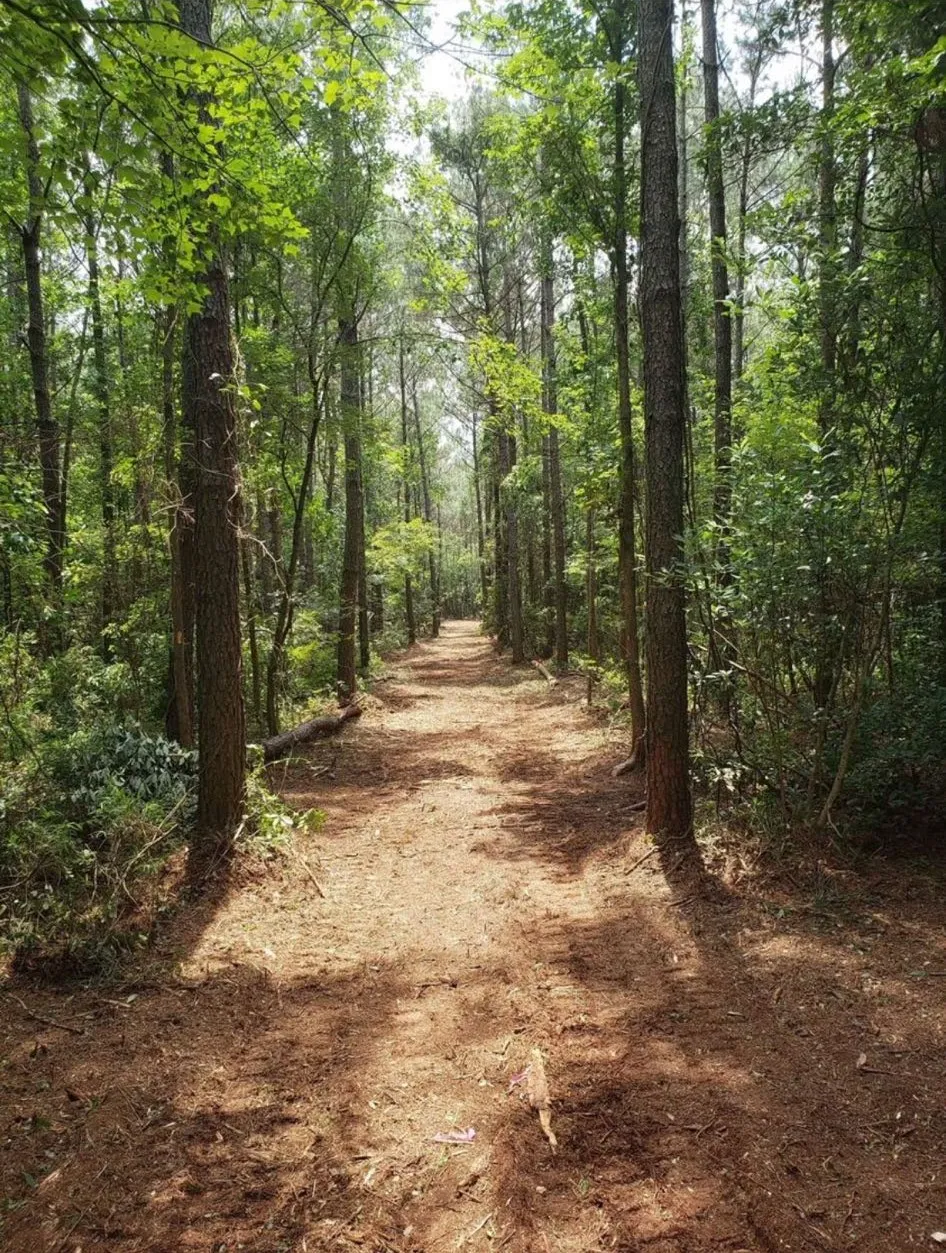
Clearing comes first. A new drive through woods means trees, stumps and brush out of the path. One customer had us clear trees and put in a new driveway. If the clearing is large, check the state erosion rules first. Our post on land clearing permits in North Carolina explains where that line sits.
Then the drive. The supplier delivers the stone, and we spread, grade and compact it with a crown. A drive may not send water across the pavement, so our grade carries runoff to a ditch or swale first.
Culverts on private drives and farm lanes are ours too. Off the state road, a crossing under your own drive is your pipe. We set it at the ditch grade on your land. Our post on fixing a washed out gravel driveway shows what water does to a drive with nowhere to go.
Planning a new drive off a state road? Call (704) 600-8146 or ask for a free on-site estimate. We come look at the route and where the water goes. Then we price the work on your side of the line and set a date. LDS Solutions is veteran owned and fully insured, based in Shelby and working in Cleveland, Gaston, Lincoln and Rutherford counties.